



Kerry Packer’s famous words about “minimising tax” are probably ringing in the heads of Australian investors following the tax changes presented in last month’s federal budget.1
The changes reduce some of the tax benefits that can be gained from investment structuring, which means that after-tax outcomes of the underlying investments become even more important to overall tax efficiency.
Tax efficiency starts with the investment strategy.
A strategy designed for low turnover and managed with flexibility can help reduce tax costs.
Strategies that achieve these lower tax costs while also keeping a focus on higher expected returns can lead to better after-tax take-home returns.
An investment’s relative tax efficiency also depends, in part, on the amount of control and flexibility it gives an investor about when they pay taxes.
A fund with flexibility to reduce realised capital gains through thoughtful trading enables investors to defer capital gains taxes.
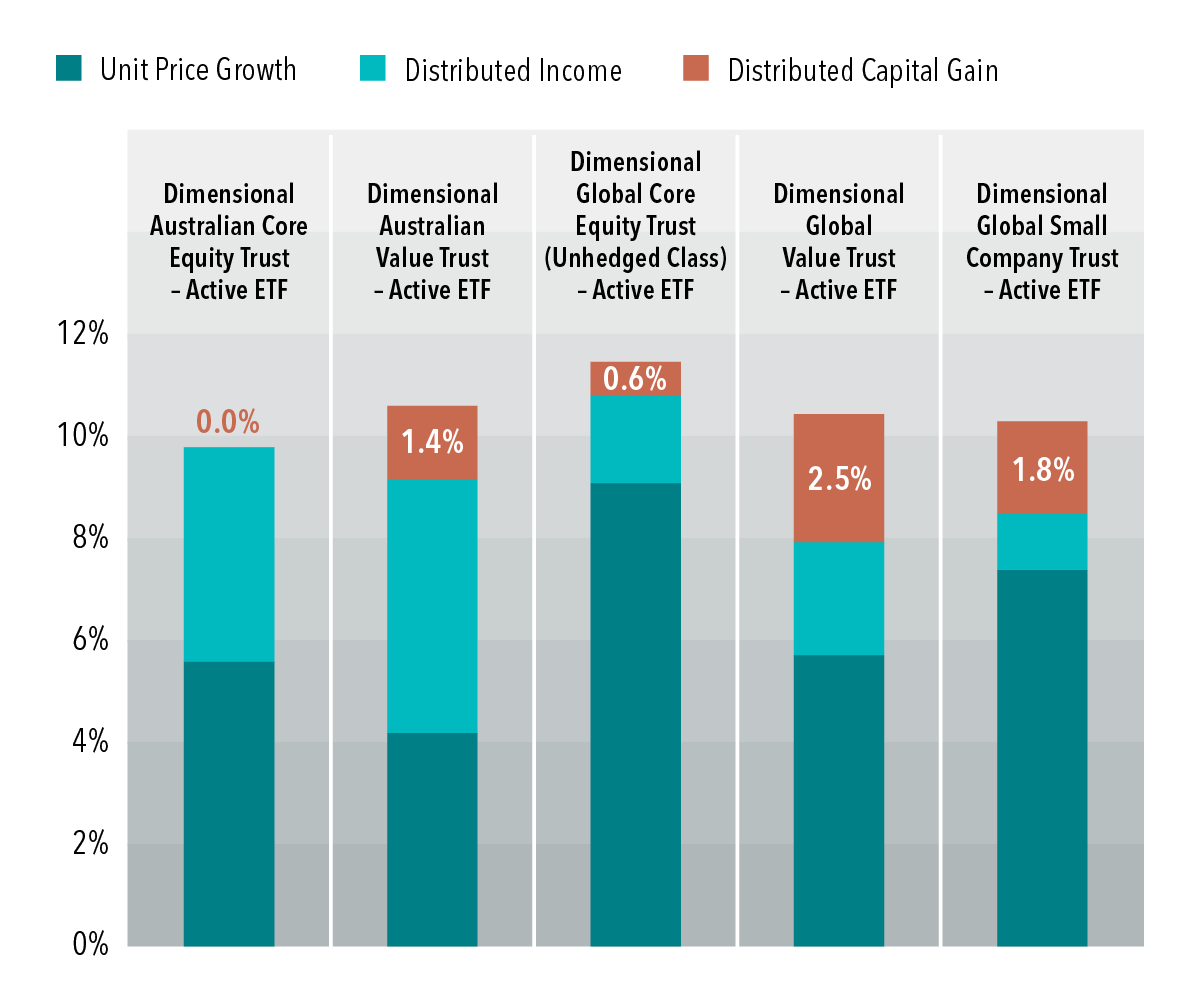
Dimensional’s effective capital gains management has resulted in relatively low distributions of capital gains over the last decade, with most of the funds’ return coming from growth in unit prices.
This doesn’t eliminate an investor’s future tax obligation, but it does give them more control over when they actually pay taxes and, in the meantime, allows their full investment amount to compound.
EXHIBIT 1
Average Total Returns
Financial year 2016-2025
Past performance is not a guarantee of future results. Investment capital, growth and income returns are not guaranteed.
If you need help getting the most tax effective investment strategy, give us a call on 02 9545 5668.
Footnotes
1. In the November 1991 House of Representatives Select Committee on Print Media, Kerry Packer, Media tycoon, famously quipped, “I am not evading tax in any way, shape or form. Now of course I am minimising my tax and if anybody in this country doesn’t minimise their tax, they want their heads read.”


